

| |
|||
| a | |||
Focus
- Naval Technology |
|||
DCNS
Lorient Shipyard Visit and FREMM Frigates Program Update with Vincent
Martinot-Lagarde |
|||
By
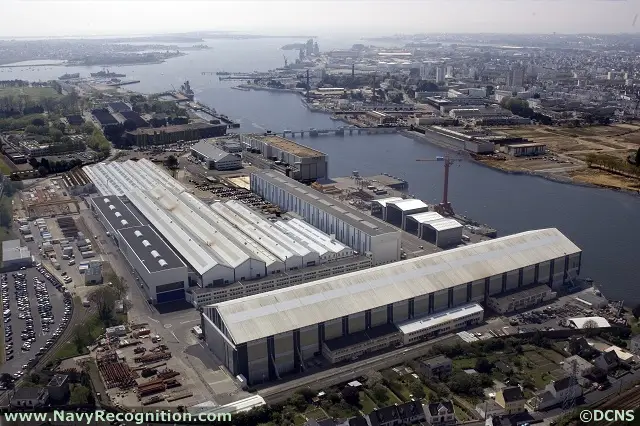
Xavier Vavasseur Navy Recognition was recently invited by DCNS to visit their Lorient (Brittany) based shipyard. The Lorient site specializes in surface vessel. It was the birthplace of many French Navy vessels such as Aviso type ships, the La Fayette class of frigates (and its export derivatives) and even several classes of cruisers before and after World War II. We also took this rare opportunity to sit down and ask a few questions to Vincent Martinot-Lagarde, FREMM Programs Manager. |
|||
 The
DCNS shipyard in Lorient specializes in surface vessels (picture: DCNS) The
DCNS shipyard in Lorient specializes in surface vessels (picture: DCNS) |
|||
Lorient
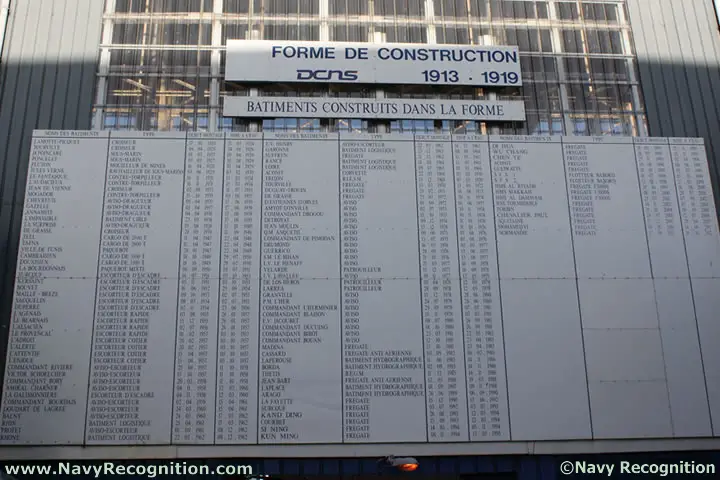
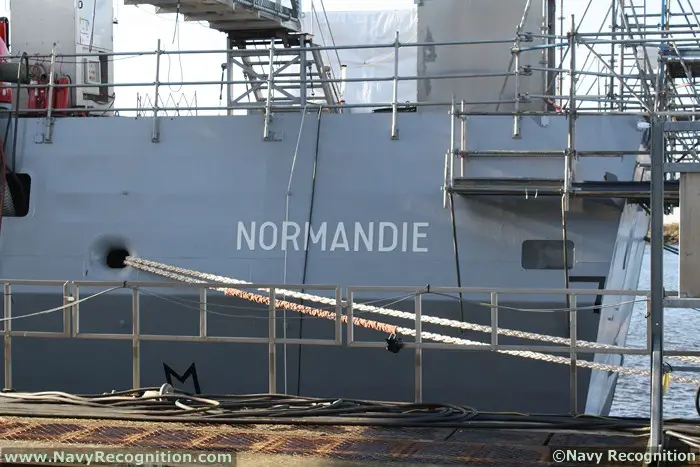
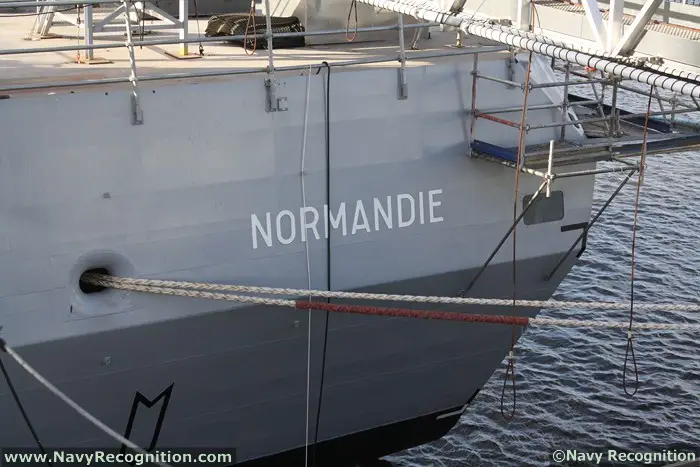
Shipyard’s History Lorient (The Orient in French) was founded in 1666 around a shipyard to support the French East India Company. The city of Lorient has developped around the activity generated by this shipyard. Around 1690, the French Marine Royale establishes some naval construction activities in the town. In 1770, Lorient becomes a Royal Shipyard and continues to expand as the main port in South Brittany. Throughout the nineteenth century Lorient benefits from the industrial revolution that transformed Europe. The industrial facilities in the shipyard are constantly modernized: steel replaces wood, motorized vessels prevail over sailing. Lorient has know-how in the construction of these new vessels. During World War II, in 1941, the German Navy establish a headquarter for their submarine fleet in Lorient along with what will become the largest WWII German submarine base. During the Second World War, the French government had its military ships designed and built by the Direction des constructions navales (DCN), later incorporated into the French procurement agency Délégation générale pour l'armement (DGA). In 1997, the French government decided to reform its shipbuilding and procurement system for naval systems. Acquisition was separated from design and production. DCN retained the industrial part. In 2007 DCN became DCNS, following the entry of Thales in the group’s capital. DCNS Lorient shipyard in Numbers 2000 staff on site: - 1200 of them actively working on FREMM shipbuilding activities - 600 engineers working on the design and concept - 100 people in support position There is also 800 daily contractors contributing to the shipbuilding activities. 110 ships were built inside and launched from the covered dry-dock: from the LaMotte-Piquet cruiser in March 1924 to the Normandie Frigate in October 2012. FREMM Modular Construction in 4 steps There are 4 main steps in the construction of FREMM Frigates. Step one (Figure 1) consists in cutting steel sheets with plasma ray, then assembling or wielding those parts together in order to form small to medium blocs. These steps take place in a dedicated building. The blocks are then moved to a different building for step two (Figure 2). |
|||
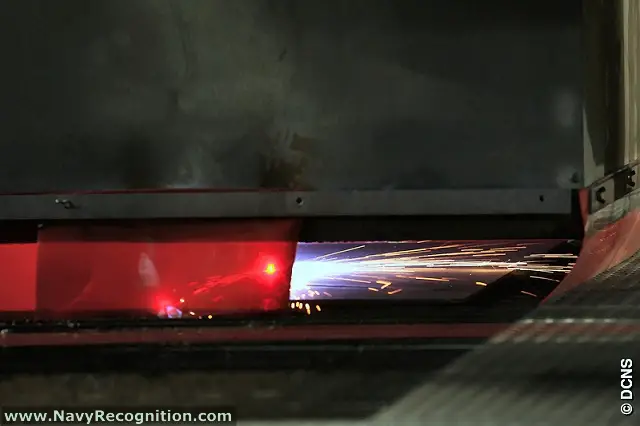 Figure 1 - 8 October 2009: Laser cutter cuts first plate for FREMM frigate Normandie (picture: DCNS) |
|||
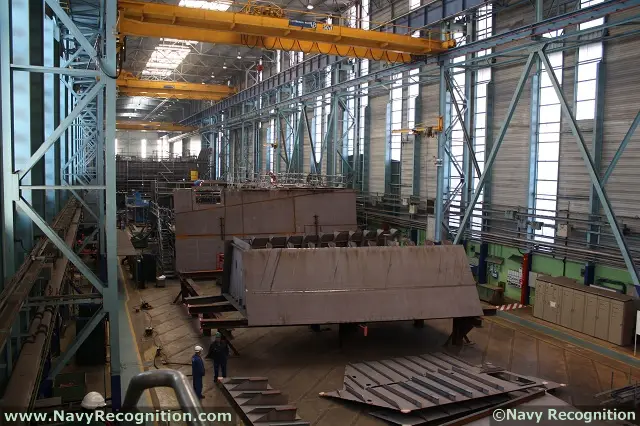 Figure 2 - Blocks from step one are assembled into rings and large superstructures |
|||
The
second step in the FREMM construction process consists in assembling
the blocks obtained in step one in what is called “rings”
or “superstructures”. During the process, some of the basic
internal components are fitted inside the larger blocks such as wiring,
piping, engines and various equipments… |
|||
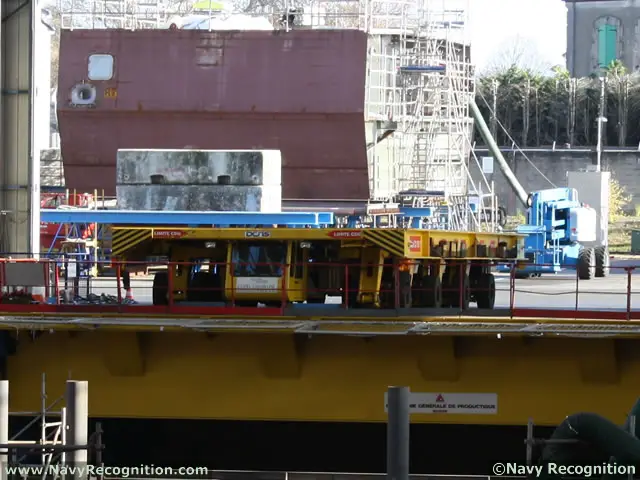 Figure 3 - A self-propelled modular trailer is used to move large blocks to the covered dry-dock |
|||
For
the third step, large blocks from step two are moved to the covered
dry-dock using self-propelled modular trailers (or SPMT, see figure
3). The large structures are then lowered in the dry-dock using an oversized
elevator or large cranes. The DCNS covered dry-dock in Lorient is one
of the largest in Europe. It is so large that it may accept several
Frigates at the same time. For example, when the Normandie Frigate was
launched in October (less than two months before our visit to the Lorient
shipyard), block elements of the Provence Frigate (third vessel of the
Aquitaine class, fourth vessel of the FREMM series) were present behind
the Normandie. This also explains why we found the Provence hull at
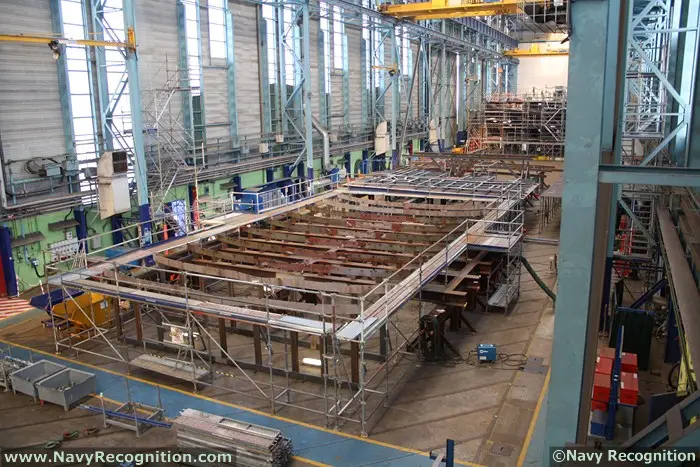
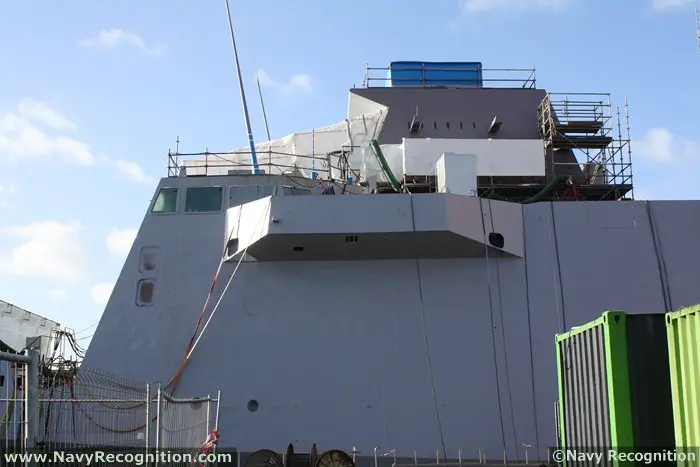
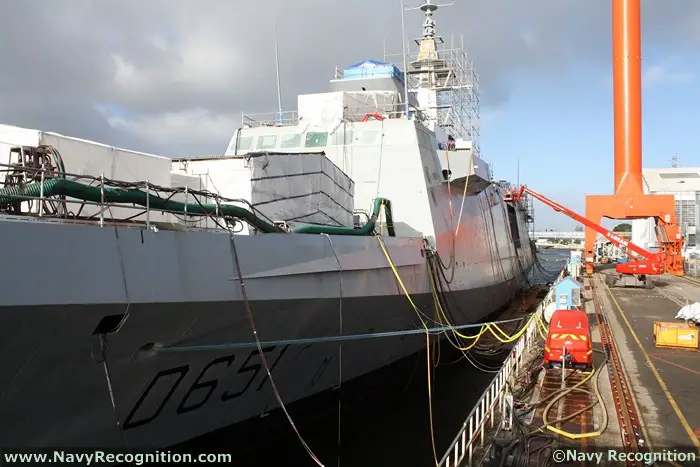
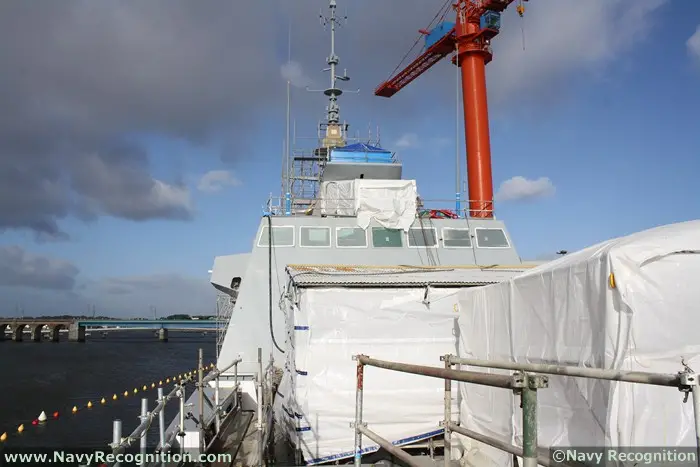
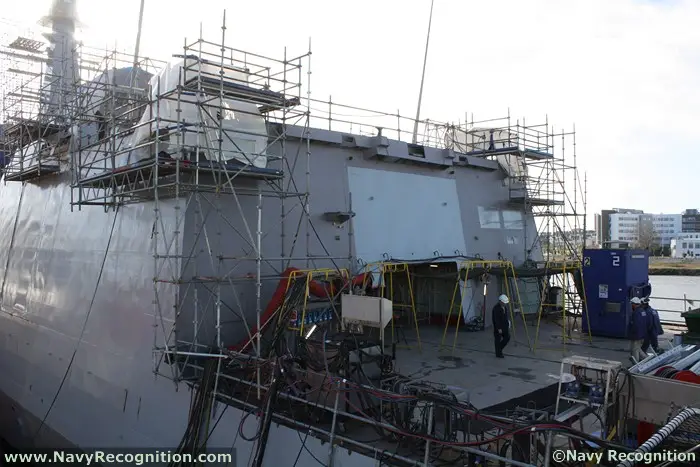
such an advanced stage of completion (figure 4 and 5). Before the launch,
the hull is painted with a first coat of anti-corrosion paint. |
|||
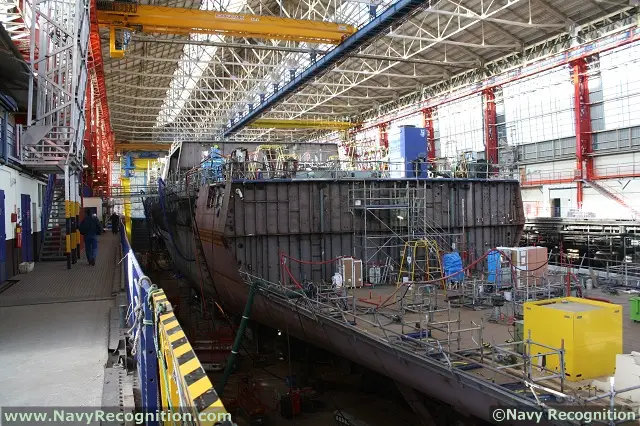 Figure 4 |
|||
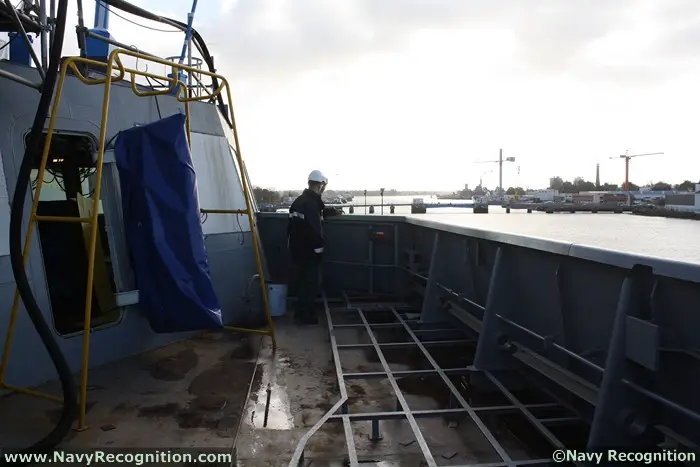
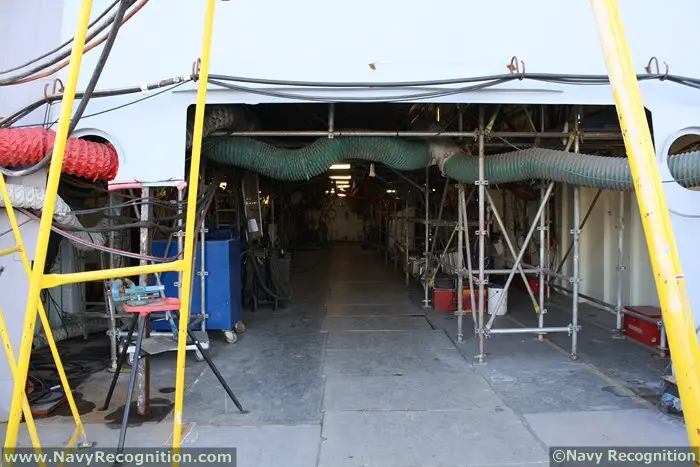
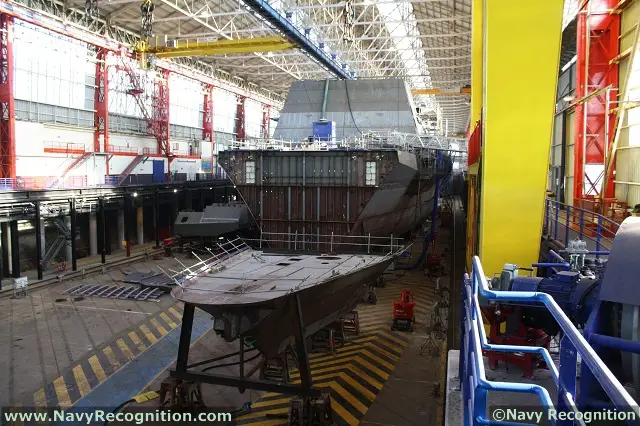 Figure 5 - We were surprised to see FREMM Provence at such an advanced stage of completion |
|||
The
fourth and last stage consists in launching the FREMM in the water (figure
8) and finish the outside fitting of the vessel (by installing the mast,
radar, weapon systems…) as well as the interior fitting. FREMM
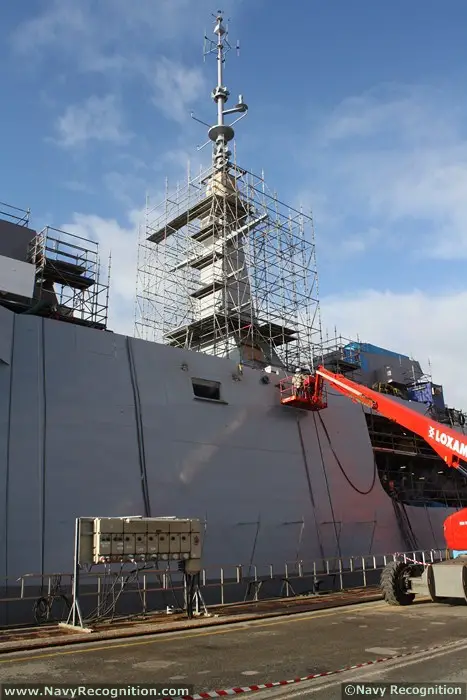
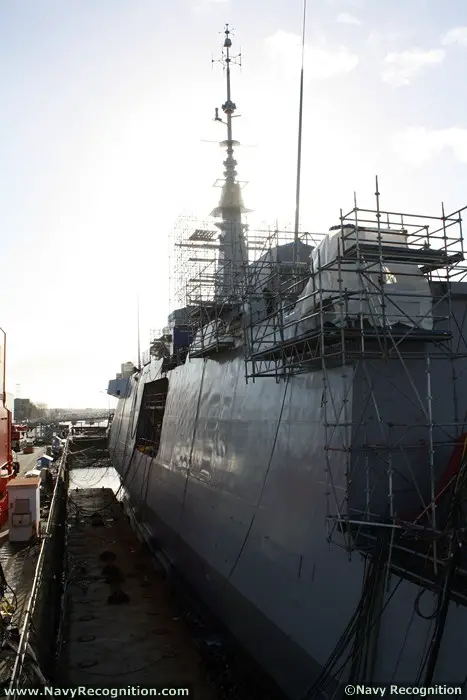
Normandie mast had just been fitted prior to our visit (figure 9) while
the Oto Melara 76mm main gun was getting ready to be installed in the
following days (figure 10). The hull mounted sonar, bulbous bow, propellers
and stabilizer fins are also fitted once the Frigate has been launched.
Once all systems are fitted, the FREMM is ready to start sea trials. |
|||
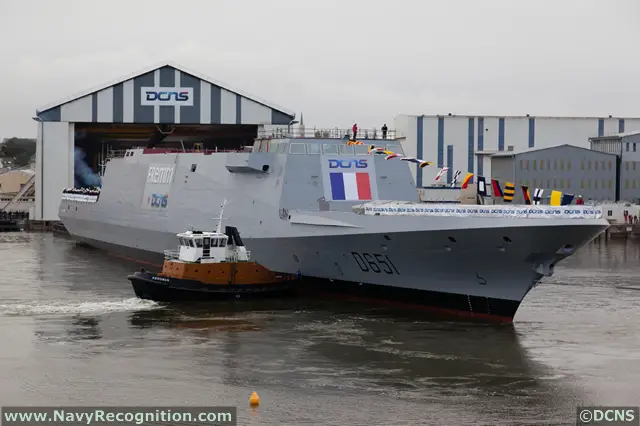 Figure 8 - The Normandie FREMM Frigate, second ship of Aquitaine class is launched at DCNS shipyard in Lorient on October 18, 2012. (Picture: DCNS) |
|||
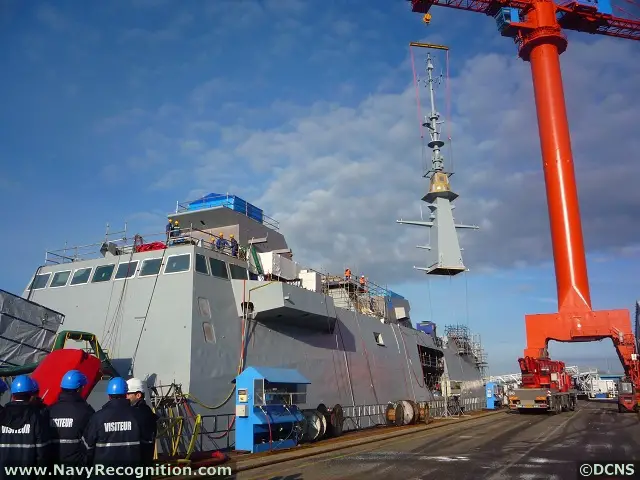 Figure 9 - The mast is installed on FREMM Normandie (Picture: DCNS) |
|||
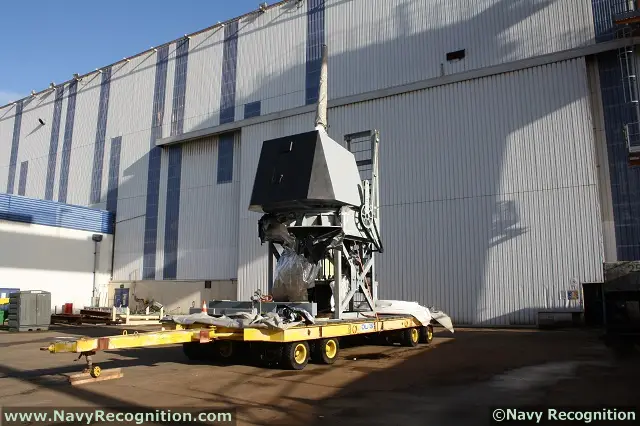 Figure 10 - The Oto Melara 76mm main gun was taken out of storage during our visit in order to be fitted on FREMM Normandie in the following days. |
|||
FREMM
Program update The FREMM program is conducted within OCCAR in bipartisan cooperation with Italy. The target of this program for France is 11 FREMM frigates including nine in anti-submarine version (ASW) and two in air-defense version (FREDA). The order of the first eight vessels was signed in 2005 as part of the 2003-2008 French Defense bill. The order of the last three FREMM occurred in 2009. Italy has ordered its first two frigates in 2006 and the next four in 2008. Main contracting is carried by a group formed by DCNS and Orizzonte Sistemi Navali (Finmeccanica-Fincantieri). In total, the program is expected to cost € 8.6 billion in 2012. The average price of a frigate stands at € 592 million in 2012 (excluding development costs) for eleven frigates, with a delivery rate of one frigate per year for France. The first French FREMM frigate, Aquitaine, began sea trials in April 2011 and was delivered to the Navy in August 2012. The second French frigate, Normandie, was launched in October 2012. The last FREMM is expected to enter service in 2022. During the Normandie launch ceremony, French Defense Minister, Jean-Yves Le Drian said, that the FREMM program would be funded until completion. Five FREMM frigates are currently under construction at the Group’s Lorient Shipyard: » second-of-type Mohammed VI for the Royal Moroccan Navy is undergoing sea trials » third-of-type Normandie is undergoing outfitting » the fourth-of-type Provence is under construction in the dry-dock » pre-outfitting of hull blocks for the fifth-of-type Languedoc began in September 2011 » plate cutting and machining for the sixth-of-type Auvergne began in August 2012. Link to FREMM Aquitaine class Frigates Technical Datasheet |
|||
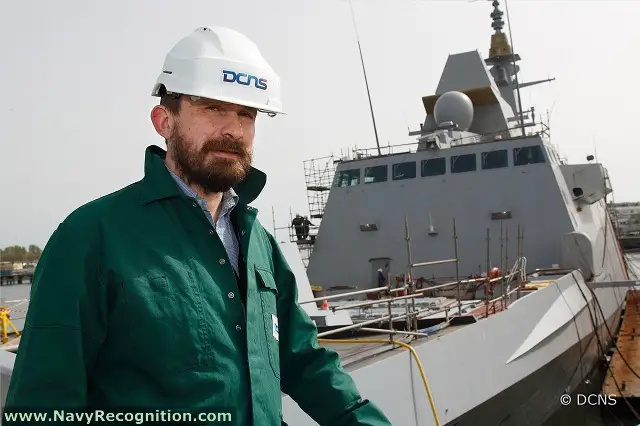 Vincent Martinot-Lagarde, FREMM Programs Manager with the Royal Moroccan Navy FREMM Mohamed VI in the background (Picture: DCNS) |
|||
Q&A
with Vincent Martinot-Lagarde, FREMM Programs Manager Navy Recognition (NR): Does DCNS uses the same tools and techniques in the construction of FREMM Frigates and GOWIND Corvettes? Vincent Martinot-Lagard (VML): Some of the tools would be similar, the construction site may be different depending on the type of GOWIND Corvette. A Gowind Combat type corvette would be assembled in the covered dry-dock if such a vessel would be built in Lorient. The Adroit OPV (ed. Note: GOWIND OPV) was assembled in a separate building and launched using a different method. (ed. Note: Once completed the vessel was installed on a barge and the barge was then lowered in the water). NR: What would be the impact on the FREMM program if a foreign customer ordered one or several GOWIND Combat Corvettes? VML: There would be no impact since we are capable to conduct FREMM and GOWIND construction in parallel for up to three ships per year. The fact there is a single covered dry-dock may be a bottle neck, however the dry-dock is so large that several ships may be placed inside it. The DCNS shipyard in Lorient has the industrial facilities to complete two FREMM Frigates and one GOWIND Corvette in one year. Currently the site has 5 FREMMS in production at various stages of completion. It is possible for DCNS to deliver one FREMM every 7 months. NR: Is there any US content onboard the FREMM Frigates? VML: A few sub-systems components are subject to ITAR regulations but there are no American suppliers as far as main systems are concerned. However if a customer requires, DCNS is able to integrate US systems onboard FREMM Frigates: For example for its FREMM (ed. note: Mohamed VI), Morocco requested part of the communication system to be supplied by Harris Corporation to retain commonality with other vessels in the Royal Moroccan Navy fleet. NR: Is the current crew of 108 sailors a temporary “minimum” crew? VML: This is an important issue for the French Navy and the “optimized crew” of 108 is its own requirement. Following the first trials and anti-submarine exercises, this crew number has been validated by the French Navy. The maintenance tasks load onboard FREMM are significantly reduced. The other focus was the automatization of various systems such as the CMS (combat management system), surveillance systems or command systems. NR: Will the French Navy possibly increase the requirement in SYLVER (VLS) cells for its future FREDA (Air-defense FREMM) from 32 cells to 40 or 48 cells? VML: I am not aware of anything new regarding this topic. Today, the FREDA is compatible with SYLVER A50 (ed. note: VLS system), compatible with ASTER 15 and 30 (ed. note: Surface to air missile) NR: Currently, could a third VLS row be fitted on Aquitaine class Frigates? VML: It is something DCNS could study, however today we mostly study four SYLVER silos configurations, therefore 32 missiles. On the FREMMs offered to Greece, the customer had a requirement for MICA VL so we studied a design with VLS cells located on the side of the helicopter hangar. There is always a way to adapt a design to accommodate more missiles, physically we can do many things with a surface vessel, however you have to consider the price the customer is ready to pay for such adaptations. The economic balance is to have an adaptable base and this base right now consists in a four SYLVER silos architecture and a CMS capable to accommodate several types of missiles and to adapt to future missiles. NR: Was the FREMM-ER concept with SF500 radar designed by the DCNS R&D office to answer the French Navy FREDA requirement specifically? VML: It is a solution to answer the improvement requirements of the French Navy, but also the requirements of foreign navies. The year 2013 will be decisive for this concept. NR: Why are the 20mm Narwhal remote controlled guns not installed on FREMM Aquitaine yet? VML: The Narwhal system was ordered when first of class Aquitaine was too close to completion and not compatible anymore. The first FREMM to be fitted with the Narwhal will be the Normandie because of the time taken by the gun’s manufacturing process. First of class Aquitaine will get its two Narwhal systems during the first major refit of the Frigate, expected in 2017. Ultimately, all FREMMs will have a Narwhal 20mm gun capability. The guns are set to be fitted at the top of the helicopter hangar, on the port and starboard sides. NR: Regarding the jammers fitted on each side of the FREMM, can they be compared to some CIWS in their use by the French Navy, and may they be used to jam not only incoming missile but also enemy vessels or land based targets in an offensive mode. VML: Anything related to electronic warfare is much classified. There are several jamming modes that are being tested onboard FREMM. The electronic warfare suite is largely inspired from the one present onboard the Horizon class frigates but it is slightly different. Our philosophy is to have both hard kill and soft kill capabilities: Hard kill with Aster 15 and Soft kill with a combination of the jammers that can offensively jam the seekers of the missiles, the NGDS multiple decoy launchers combined and the low radar signature of the FREMM. One has to consider the system as a whole, the vessel is very stealthy and the CMS analyses the threats and decides on the use of appropriate weapons, jammers or decoys depending on the type of threats. NR: Following the Libyan campaign (during which the French Navy conducted several coastal fire support missions with its 100mm and 76mm guns) rumors emerged in the press about a new interest among the French Navy for 127mm gun and possibly fitting such guns on a few FREMM frigates. Is there any new developments? VML: Indeed in Libya there were a lot of land attack missions from vessels which increased the French Navy interest for such capabilities. Aquitaine class FREMM is compatible with 127mm main guns, we already conducted adaptation studies. However there is no request or order from the French Navy at this time. The French Navy knows it can fit this gun on the FREMM if it has the necessary budget. NR: Does a FREMM conduct its first sea trials with all of its systems onboard or not? VML: DCNS objective is to have 100% equipped ships before their first sea trials. First of class Aquitaine was physically 100% equipped, even though some post sea trials modification were conducted because it was a prototype, but globally the ship was completed. As we progress in the FREMM series we try to complete each Frigate at a faster rate: Normandie FREMM was 80% completed when it was launched in the water, the objective for Provence FREMM is 90%, then there is a physical limit because you can not fit the mast when the vessel is inside the covered dry-dock and some of the equipment can only be fitted once the ship is launched. A couple months after Normandie was launched, some of the systems are already powered and dockside harbour testing has already started. |
|||
|
DCNS Lorient Shipyard Visit and FREMM Frigates Program Update with Vincent Martinot-Lagarde
- Posted On